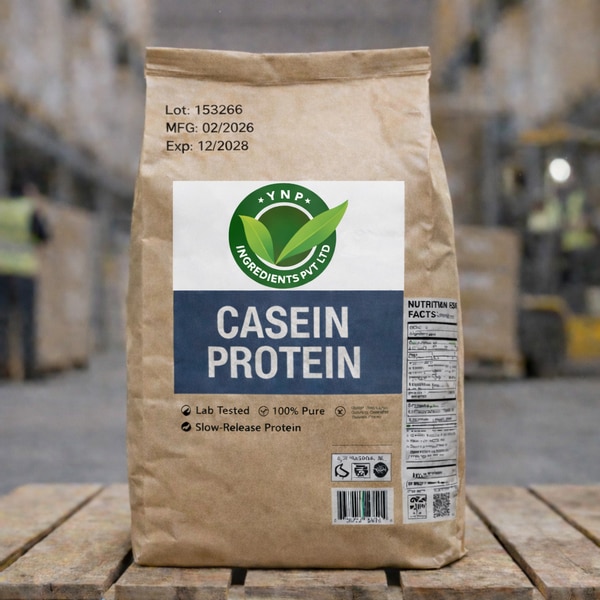
Casein Protein 80% is a premium dairy-derived protein known for its slow digestion and sustained amino acid release. It is widely used in sports nutrition, meal replacement formulas, protein supplements, and functional food applications. Unlike whey protein, casein forms a gel-like structure in the stomach, enabling gradual protein absorption. This makes it ideal for night-time protein formulations and extended-release nutritional products. Key Specifications: Protein Content: ≥ 80% Type Available: Acid Casein / Rennet Casein / Micellar Casein Appearance: Creamy white fine powder Moisture: ≤ 8% Fat Content: ≤ 2% Lactose: Low Heavy Metals: Within permissible limits Microbial Standards: As per FSSAI / Export Compliance Shelf Life: 24 months (under recommended storage) Applications: Sports nutrition supplements Night-time recovery formulas Meal replacement powders Protein bars Functional dairy beverages Weight management products Packaging: 25kg multi-layer kraft paper bags with inner liner (Custom packaging & private labeling available upon request) Storage: Store in a cool, dry place away from moisture and direct sunlight. COA, MSDS, and batch-specific lab reports available upon request. Bulk supply available for domestic and international markets.

Delhi
08048035583
+919205078447
 Chat with us
 Chat with us